• New Year, new (creative) you: resolutions for the literary and artistic mind

    Ah, January. The month where we collectively resolve to drink less, exercise more, and become the kind of person who actually enjoys quinoa. But for those of us with ink-stained fingers and overburdened bookshelves, the new year offers something more tantalising: a chance to recalibrate our creative lives. And, let’s face it, if anyone needs resolutions, it’s us — we who spent December binge-watching a Netflix series “for research” or Googling “how to write a novel in two weeks.”

    So, in the spirit of renewal, here are some literary and creative resolutions that might make 2025 your most inspired year yet.


    1. Fight back against AI’s copyright encroachments

    The rise of generative AI is a bit like the plot of a dystopian novel — machines devouring our creative output to regurgitate it as lifeless mimicry. And while it might be tempting to shrug and say, “Well, at least they can’t write proper dialogue,” the existential threat to creatives is real.

    Here’s a resolution: educate yourself and get involved. You could start by supporting independent publishing collectives like Breakthrough Books, who have been set up (in part) as a creative revolt against the threats of AI. If you’re UK-based, you could also contribute to the government’s consultation on AI and copyright. The policies being shaped now will determine whether Big Tech gets free rein to plunder our work, or whether creatives retain some semblance of control over their intellectual property. Speak up, because the machines can’t (yet).


    2. Read differently

    Yes, everyone’s banging on about reading more, but quantity isn’t everything. This year, resolve to read differently.

    • Genre-hopping: Are you a literary fiction purist? Try a science fiction classic. A crime thriller junkie? Dip your toes into poetry. Expanding your horizons could unlock new inspiration for your own work.
    • Slow reading: Let’s reclaim the joy of savouring words. Pick up a pen, underline passages, and take your time — even if it means finishing only half as many books. (That’s right, Goodreads, we said it). The joys of simple doodles and marginalia are not too be dismissed.
    • Support the little guys: Swap Amazon’s algorithm for our curated lists of independent publishers (here and here). Your bookshelf will thank you, and so will the literary community.

    3. Support your local library

    Neil Gaiman once said, “Libraries are the thin red line between civilization and barbarism,” and who are we to argue with Gaiman? Libraries aren’t just places to borrow books; they’re community hubs, refuges, and fountains of inspiration. If you want your library to still exist in 2026, resolve to support it now. Borrow books, attend events, and loudly advocate for funding. For more on why libraries matter, revisit our love letter to them here.


    4. Buy less, create more

    Sure, it’s tempting to splurge on the latest Moleskine planner or an overpriced “productivity” app, but let’s be honest: the tools aren’t the problem. This year, resolve to spend less time shopping for inspiration and more time creating. Paint, scribble, or start that novel — with whatever you already have on hand. The magic isn’t in the notebook; it’s in you.


    5. Find (and nurture) your creative community

    Creativity can be isolating, especially when you’re staring down a blank page with nothing but self-doubt for company. Resolve to find your people this year. Join a local writing group, share your work online, or just meet a friend for coffee and complain about how hard writing is. Collaboration and camaraderie are fuel for the creative soul.


    6. Rediscover play

    Remember when you created purely for fun? When writing terrible poetry or finger-painting felt like a triumph, not a failure? Make space in 2025 for playful creativity — try a new art form, experiment with zero stakes, and remind yourself why you fell in love with creating in the first place.

    7. Submit that project

    Remember when Shia LaBeouf told us to “just do it” and the internet – for whatever reason – went crazy for the idea? If you’ve been holding off submitting your illustrations to that agency or awards, if you have a novel sitting gathering proverbial dust when it should be in front of a publisher, or a short story desperate to be read, make 2025 the year that you actually submit your work. We, for one, are open for submissions, and we’d take a 10,000 word article or an artistic collage on the merits of ankle socks provided it is executed well. Take a chance and tap us up – or reach out to the plethora of other brilliant independent publishers, creative agencies, etc., who are out there.


    As the calendar turns and the blank pages of 2025 stretch out before us, let’s resolve to make this year not just productive, but meaningful. Support the people, places, and principles that make creativity possible—and, above all, keep creating. After all, no one’s writing the dystopian novel of the future quite like you.
  • Why books are the perfect Christmas gift
    Why not treat the ones you love to the magic of a book this Christmas?

    Tis the season to spend beyond our limits.

    UK consumers are expected to fork out over £700 per household for Christmas this year, despite a cost of living crisis and over 7 million low-income households going without essentials in 2024.

    The logic of these two realities seems strange at first – yet upon further consideration suddenly becomes clear when one considers the pressures associated with the festive season. A time where people are placed under intense pressure to consume, to purchase, to spend money they don’t have on things they don’t need. With UK advertisers expected to spend £10.5 billion on Christmas marketing, you’d be hard-pressed to navigate this time of year without feeling at least some external pressure to buy-in (literally) to the status-quo of high-intensity consumption.

    So how does one navigate this time of year effectively? Well, one option of course is to go without presents: simply to not give-in to the marketing and do Christmas your way (you’d not be alone here – other people have done this for years). Yet it is undeniably also true that for many people, the act of gift giving, is an important part not just of Christmas; but a way they stay true to themselves by showing generosity towards others.

    It is here that we hope to catch your attention. As shoppers dash to the shops to bundle in their last-minute Christmas gift purchases, filling baskets with plastic tat that will end up in landfill within days, and taking out loans to pay for them, we come offering gift suggestions of our own. These are ethical, more environmentally sustainable, and don’t break the bank.

    We’re talking, of course, about books.

    Books make the best stocking fillers for so many reasons. Literature performs the basic magic of what things look like though someone else’s point of view; it allows us to consider the consequences of our actions on others in a way we otherwise wouldn’t; and it shows us examples of kindly, generous, sympathetic people. What’s more, books provide a better service than any VR headset can in terms of creating new worlds and realities. At a fraction of the cost and no need for rare earth minerals. The stories contained in literary tomes give us access to a range of emotions and events that would take you years, decades, millennia to try to experience directly. In other words, literature is the greatest reality simulator — a machine that puts you through infinitely more situations than you can ever directly witness: it lets you – safely: that’s crucial – see what it’s like to get divorced. Or kill someone and feel remorseful. Or chuck in your job and take off to the desert. Ultimately: it lets you speed up time and transports you to all possible corners of the infinite universe of the imagination. These are just some of the reasons we read.

    But what literary delights could you pick up for your friends and loved ones this year? We have brought a small collection of ideas for you below – and in doing so, we have tried wherever possible to find ways that you can also support independent publishers and bookstores, as well as brilliantly talented writers and artists. This hopefully means you can feel confident in knowing your Christmas generosity extends beyond the lucky recipient of your gift.

    The shortlist: the best literary stocking fillers

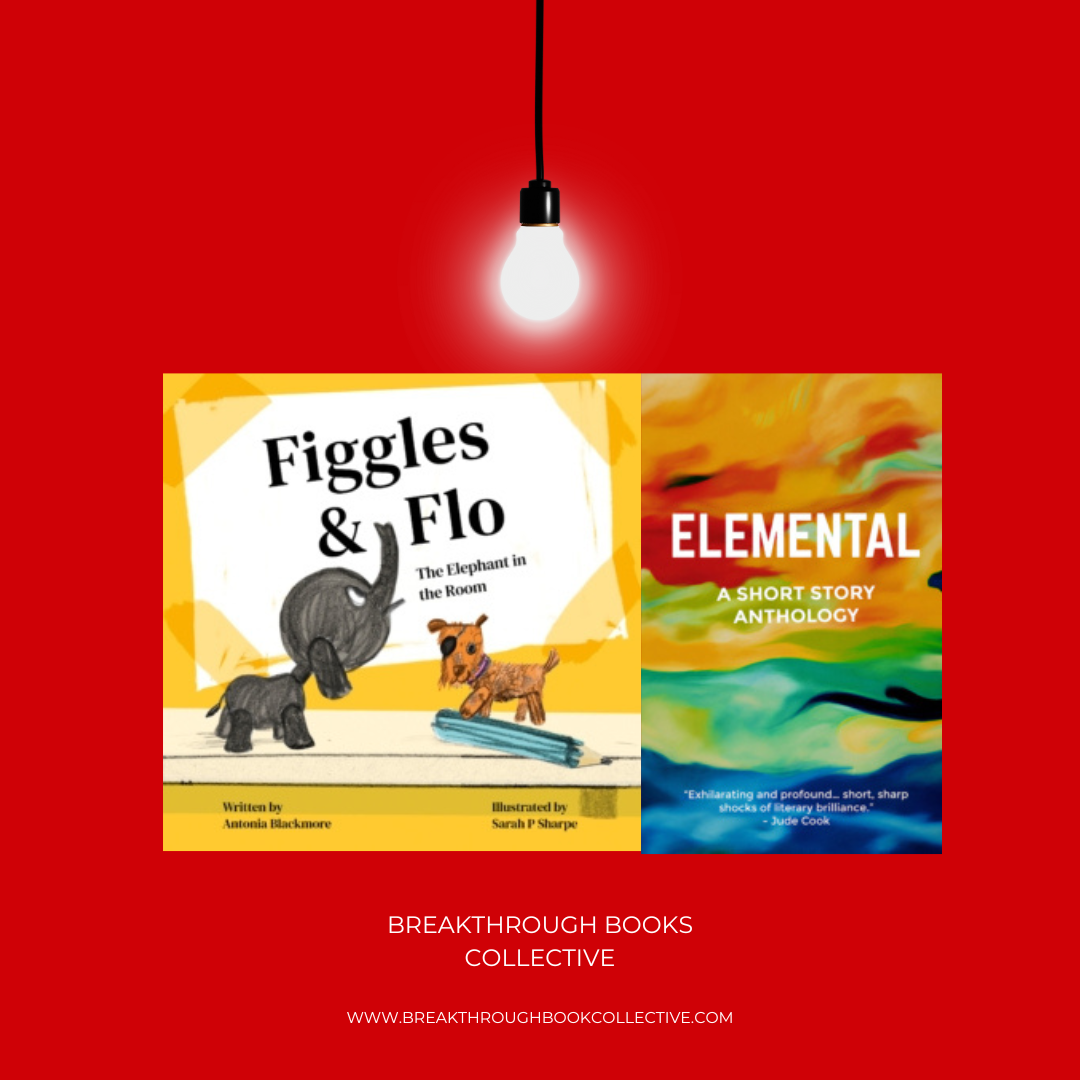
    Breakthrough Books put power (and money) into the hands of authors, with 90% of their profits going straight to the writers and artists they publish. Their recent collection, Elemental brings dozens of brilliant writers together in an array of excellent short stories guaranteed to satisfy any literary taste. Meanwhile, their latest illustrated children’s book, Figgles & Flo has been described as “A beautiful, helpful and emotional story filled with understanding and hope for any child (of any age) dealing with grief. Just wonderful.” There’s something for everyone here in their catalogue.

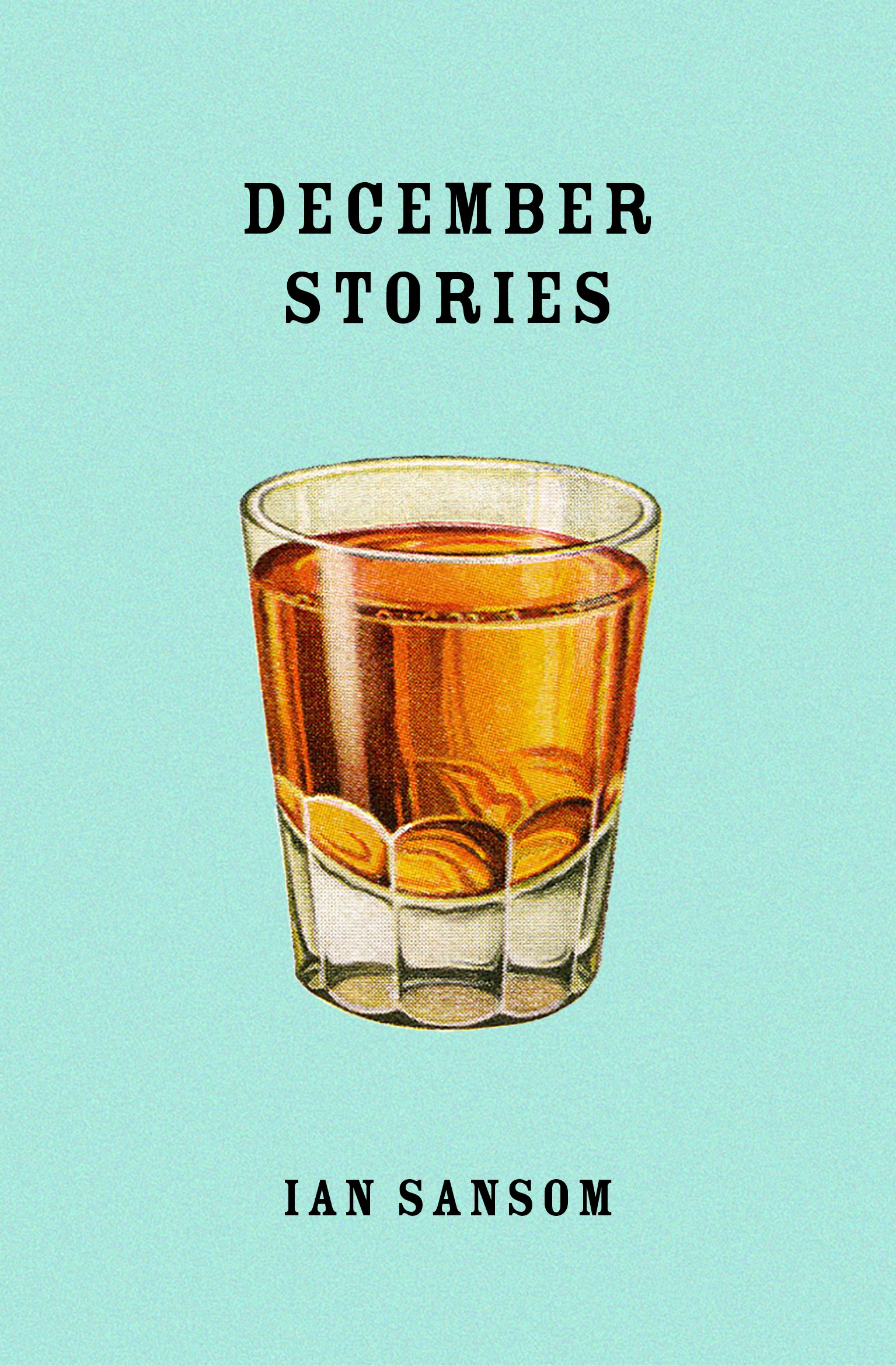
    The anticipation, frustration, despair, ecstasy and uncertainty associated with the festive season are laid bare in Sansom’s latest collection. December Stories will make you laugh, it will make you cry, it will make you wonder how on earth we ever survive this darkest of months. Published by the brilliant indie publishers No Alibis Press (of the equally excellent No Alibis bookstore), this is a fantastic book for anyone to unwrap at Christmas. Plus – there’s also a sequel! So you have next year sorted, too.

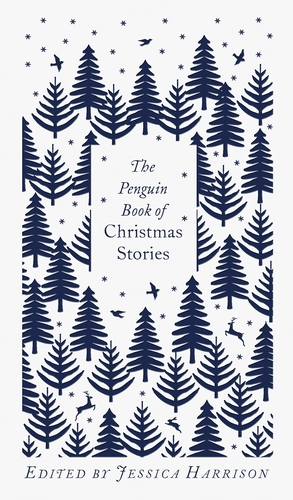
    Okay, so not an indie publisher this time. But regardless, this collection features some of the most festive of yuletide stories, from legendary writers like Chekov and Angela Carter. A generous selection of some of the greatest festive stories of all time. When we talk about stories having the power to transport you (and being better than a VR headset), these certainly have the power to do just that.

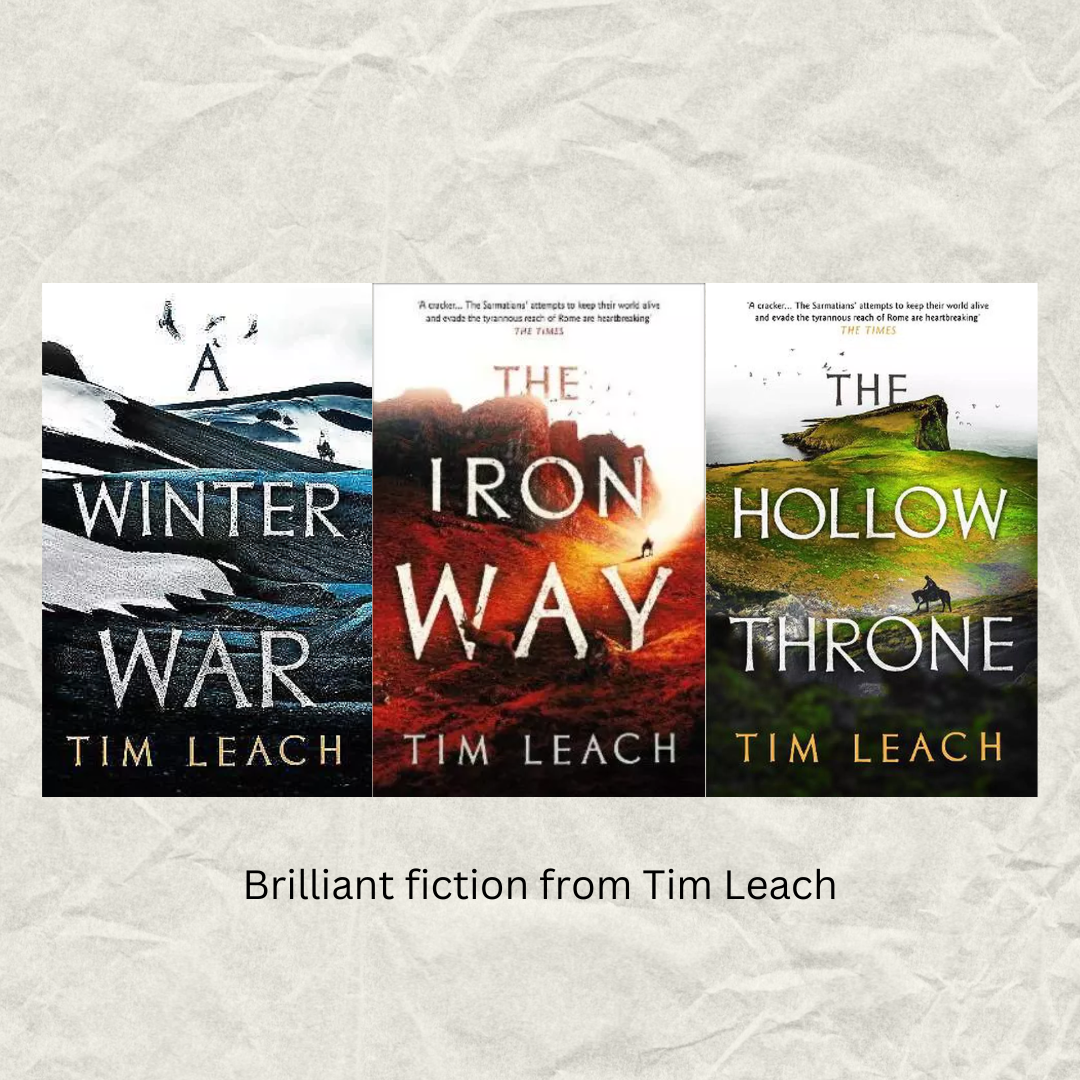
    Tim Leach is not just a friend of Nothing in the Rulebook, he is an absurdly talented writer with the power to transport you through time. Know any fans of ‘the rest is history’ or ‘Fall of civilisations’ podcasts? Then start them off with Leach’s ‘A Winter War’ (fitting title, yes?) and over the next three years you’ve got your gifts to that person sorted as you work through his excellent trilogy, which has just concluded with the unmissable conclusion The Hollow Throne.

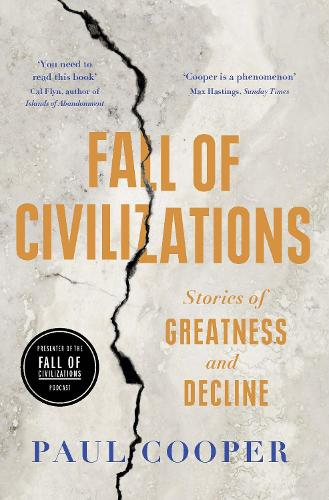
    Keeping with the historical theme (and did we mention the ruddy brilliant Fall of Civilisations’ podcast just then? Oh yes, we did!), pick up the podcast in book form and explore how a range of ancient societies rose to power and sophistication, and how they tipped over into collapse. Paul M. M. Cooper – the talent behind it all – is also just the best. You heard it here, first.

    In her second collection, award-winning author Helen Grant visits Flanders, Paris, and the remotest parts of Scotland, examining themes of transgression, repercussion, and revenge. All great topics to grip your attention through the cold winter months as you snuggle up in a cosy corner and brace yourself against the grim realities of the outside world. Published by the brilliant folk at indie publishers Swan River, another great way of supporting talented writers and publishers helping to get their work out there.

    Finally setting the record straight and revealing the philosophical genius of the canine species, the first book from Nothing in the Rulebook’s own Samuel Dodson and Rosie Benson demonstrates how Marx, Socrates and many other celebrated intellectuals shamelessly pilfered their pooches’ theories. Beautifully illustrated and filled with both puns and philosophy, it’s the perfect gift for dog lovers, philosophical enthusiasts, and anyone in need of some festive cheer.


    Still looking for Christmas gift inspiration? You might like to check out our list of 50 independent and alternative publishers to buy books from. Or perhaps visit our list of top drawer independent bookstores, who kept going even through the trials of the COVID pandemic. There’s bound to be something on their shelves that fits the bill for your loved ones this festive season.

    Looking for a totally free, zero cost option? Why not take your friend, loved one or child to your local public library and help get them set up with a library card? That way you’ll get unlimited access to brilliant books all year round. And what could be better than supporting our libraries while you’re at it?

  • Literary marvels: the ‘Unburnable Book’
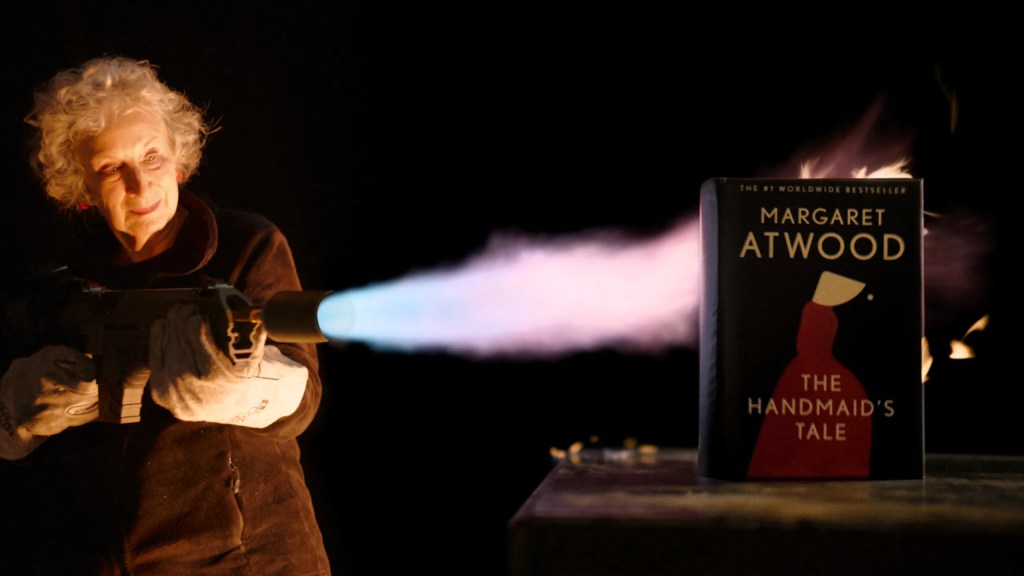
    Margaret Atwood, feat. flamethrower. Photo credit: Sotheby’s/Getty images.

    Books are vessels of ideas — thoughts inked onto pages, bound together in fragile, and, frankly, flammable covers.

    Now, you might read that sentence and think, wait, why are they talking about books being flammable? That seems like a strange description to leap to when thinking about an art form that includes works that have genuinely advanced human civilisation and understanding of the world. And you’d be right of course: except that for a portion of humanity there seems a select group who look at books as something that ought not to be read or cherished; but to be destroyed.

    Historically, their fragility has made books the target of censorship. From the bonfires of the Inquisition to the ash-strewn streets of Berlin in 1933, book burnings have long been symbols of the eradication of dissenting voices. But what if a book could physically resist such destruction? What if it could defy not just metaphorical silencing, but the very flames themselves?

    In 2022, Penguin Random House collaborated with author Margaret Atwood to create just such an object: the “unburnable” edition of The Handmaid’s Tale. Not merely a marketing stunt — though undeniably a striking one — this artefact became a defiant symbol of literature’s enduring resistance to suppression.

    A flame-resistant manuscript

    Crafted with precision and purpose, this unburnable edition was a feat of materials engineering. The pages were made from phenolic sheets, a substance typically used for circuit boards. Its binding featured aluminium foil, while the spine was constructed from stainless steel. Even the ink was specially chosen to withstand extreme temperatures, ensuring that every word would remain intact, regardless of how ferocious the fire.

    To demonstrate its indomitable nature, none other than Margaret Atwood herself wielded a flamethrower against her own creation. In a video that quickly went viral, Atwood dons the heavy weapon and gears up like Arnie in Commando. She then aims the fiery weapon at the book, her expression equal parts mischievous and triumphant. As the flames lick at the tome, it emerges unscathed — a phoenix that never needed to burn to rise.

    WATCH: Watch acclaimed author Margaret Atwood attempt to burn her own book with a flamethrower below:

    Why create the unburnable?

    The unburnable book’s creation was no idle exercise in excess. It was produced as a one-off collectible and auctioned by Sotheby’s to raise funds for PEN America, an organization dedicated to defending freedom of expression. The timing was significant: Atwood’s The Handmaid’s Tale had become an emblem of resistance in the face of rising authoritarianism, particularly in the United States, where debates over book bans were (and remain) increasingly polarised.

    Atwood herself has often remarked on the eerie prescience of her dystopian novel, set in a society where women’s autonomy is stripped away, and their lives are dictated by a theocratic regime. The unburnable edition acts as both a warning and a testament. It’s a reminder that while ideas can be contested, suppressed, or even outlawed, their persistence often defies destruction.

    The symbolism of survival

    Books hold a duality: they are both fragile objects and enduring symbols. A single spark can reduce a library to ash, yet the ideas within those books often outlive their physical forms. The unburnable edition of The Handmaid’s Tale flips this dynamic. Here, the physical book itself resists obliteration, becoming a literal embodiment of literature’s tenacity.

    This unburnable edition invites a meditation on what we value in books. Is it the tangible object we cherish? The tactile sensation of pages between fingers? Or is it the ideas and stories that transcend their physical medium? In an age where digital books can be deleted with the click of a button and physical copies face bans in schools and libraries, this artefact reminds us of the inherent vulnerability — and resilience — of the written word.

    And to continue with this thought – the rising number of book bans (and sometimes burnings) across the USA not only invites those of us who care about these things to rise up against them. But also places ever greater emphasis on the places that guard and protect books. Most notably? Our public libraries. In a world in which State Senator and gubernatorial candidates threaten to “burn woke books”, our librarians find themselves placed as guardians of something that is sacred to many; but terrifying to a select few. If that thought strikes a chord with you – do consider ways of supporting your own local library at a time of ever-greater funding cuts.

    A singular artefact, a universal message

    While only one unburnable book exists, its message is universal. By enduring the flames, it calls attention to the broader, ongoing threats to free expression. It asks us to reflect on what’s truly at stake when books are burned—not just ink and paper, but the collective memory and imagination of a culture.

    In creating a book that cannot burn, Atwood and Penguin Random House have given us a story within a story: one of resistance, innovation, and hope. It’s a tale that reminds us, as all great literature does, that even in the face of destruction, words have a way of surviving—and sometimes, they do so in ways we never imagined.


    Enjoyed reading this post? You might also like these articles from our archives:

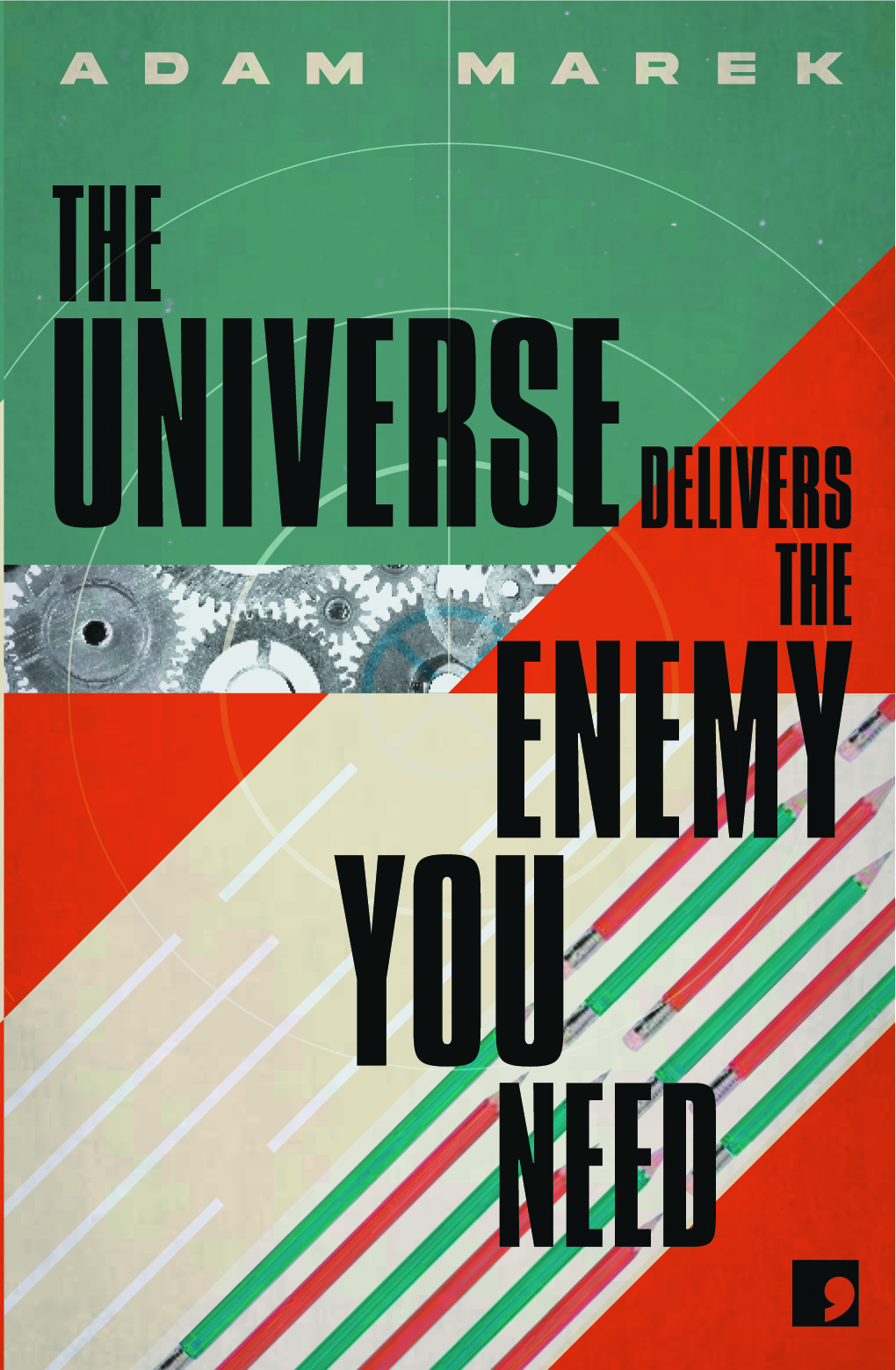
  • Book review: The Universe Delivers the Enemy You Need
    “Irreal, surreal, new weird, slipstream, fantastical fiction” from Adam Marek – in short story form. What more could you ask?

    Adam Marek’s fictions have garnered a reputation for their blend of surrealism and domestic familiarity – even prompting the coinage ‘Marekian’. Eleven years have passed since his last collection The Stone Thrower. That gap puts a weight of responsibility on his latest project, The Universe Delivers the Universe You Need, given the high praise his previous books attracted.

    Off the bat then, he has not abandoned his readiness to delve into different genres. Here we have several future-tech pieces, a retro-toned sci-fi tale, the surreal, the concept-driven, and a couple of straight-up realistic stories. If this were a first collection a reviewer might say he’s finding his voice. But Marek has long found his voice and his stance: one of endless fascination with how strange people can be. He follows the credo that psychological reality is best conveyed via the fantastical.

    Irreal, surreal, new weird, slipstream, or fantastical fiction (Marek’s preferred term) often battles to reach the mainstream and these, being short stories, are doubly niched. Despite this, there are a healthy number of writers (UK and beyond) drawing upon elements of the fantastical: Helen Oyeyemi, Daisy Johnson, George Saunders, Kelly Link, David Mitchell, Zoe Gilbert, Etgar Keret, Sarah Hall. And if I may drop in a quotation from a writer feted for her realism: “The surreal is as integral a part of our lives as the ‘real’” – Joyce Carol Oates. Besides, realism fast loses its right-of-first-refusal on depicting the world when that world is one of people living lives untethered from place or history, communing online with artificially intelligent entities.  

    At their best, Marek’s stories are a conjuring trick performed right before your eyes. You believe you see every movement but don’t understand how the thing was accomplished.

    Shouting at Cars for example, begins with an opening sentence that deposits the reader in a world of wonder: “Every Christmas Eve we took a hamper to the troll beneath the East Bridge.” The dad speaks to the creature in the way one might with an elderly relative who has just cursed at the nursing staff. The family soon bids farewell.

    It may be a parable about how we treat the homeless, or a family’s shameful secret. “What made me angry was how everyone else in the house seemed so much more relaxed after the troll died.” But this interpretation stretches and tears when, as an epilogue almost, the young narrator reveals how he used secretly run amok with the troll, shouting at cars, spraying graffiti, rolling manhole covers down the street. ‘Everything I know that’s worth knowing I learned from the troll.’

    It’s one of Marek’s ‘fantastical’ mode of stories. Another memorable one is The Bullet Racers. It’s a wonderfully absurd tale of a village festival where each year local boys try to outrun a bullet. The Ghosts We Make is another lucid tale with aberrations of weirdness. Every time the couple have sex, a small ghost will hover around the room for a few days. It’s a playful story where interpretations constantly slip away.

    I could attempt an exegesis of his method, but Marek has saved me the bother. In interview he says, “whatever magical/otherworldly thing has bled through into reality, it’s often an external projection of something internal to the protagonist” His approach is distinct both from the surrealists, who believe their art can bypass the conscious censor, and the fantasy writers, who mine the archetypes that have powered myths and legends for millennia.

    In the last eighteen months we have all been reading apocalyptic headlines about the impact of Artificial Intelligence. Marek approaches this topic in Poppins (likely written before ChatGPT). It’s interesting but reads as though it could have been written decades ago. Companions is an intriguing and germane exploration of our (no longer futuristic) encounter with AGI entities. There’s an ineffable feeling of dislocation about his conversations with his dead grandma (are they imaginary chats or is she also an artificial entity like the companion?) Marek’s prose is often weirdly luminous:

    “She strikes one of the pink-headed matches, which I coveted so much in my youth, and draws on her cigarette with such vigour that her cheeks pull in and the shape of her skull is revealed.”

    The second chief characteristic of Marek’s writing is his deft portrayal of family relationships. It’s a Dinosauromorph, Dumdum, like three or four in the collection, features parents, and children aged between six and sixteen. A couple pay a visit to old friends and soon intuit that all is not well. It’s the sensitivity to adult friendship and parenthood which elevate this story.

    The best of the more realist stories is the penultimate, Roberto’s Blood Emporium. It has a woozy impressionistic atmosphere spiked with the boy’s summer crush and an angsty sense of crisis.  It feels like a betrayal to say my favourite story is the realist one, but it’s definitely up there in my top three.

    The book could have been streamlined with a few of the future-tech stories cut. Pale Blue Dots for example is not sufficiently distinct from Poppins which had the merit of having a sly humour. The collection finishes with an ultra-violent comic book escapade – that’s what Marek has done in his previous books (Meaty’s Boys in #1, Without a Shell in #2) so we won’t quibble.

    It’s a fascinating collection, often glowing with human warmth, and in several stories flashing with real brilliance.


    Pick up a copy of Marek’s ‘The Universe Delivers the Enemy You Need’ from Comma Press.

    About the author of this post

    Aiden O’Reilly’s short story collection Greetings Hero was published in 2014. He has worked as a translator, a building-site worker, an IT teacher, and a property magazine editor. His fiction, essays, and reviews have appeared in The Dublin Review, The Irish Times, The Stinging Fly, Litro magazine, The Missouri Review, and many other places. Follow him via BlueSky @aidenoreilly.bsky.social and via Facebook.

  • ‘Spine’? More like spineless
    An AI generated image using the prompt: ‘Create a cartoon image of a group of tech bros who have started an AI company called ‘spine’ desperately searching for their spines.’

    Some ideas are so catastrophically bad they make you want to curl into a ball and softly hum the tune of humanity’s decline. Enter Spines, an AI-driven publisher that plans to vomit out 8,000 books in 2025 alone. Yes, you read that correctly: 8,000 books. It’s less publishing and more literary spew — a firehose of words splattering across the cultural landscape, each volume the equivalent of a plastic bag floating on the breeze, destined to clog up someone’s Kindle. If this doesn’t scream “late-stage capitalism in a clown car,” then what does?

    Let’s get this straight: this is not writing. This is not publishing. This is VC-bro alchemy, turning buzzwords into money for people who already have too much of it. Spines isn’t so much a disruptor as a desperate gold prospector panning for whatever spare change is left in the wake of TikTok booktokkers and indie authors who, astonishingly, actually care about what they create* Their business model might as well be called “Move Fast and Break Literature.”

    And while Spines gets press for their “disruption”, what they’re actually disrupting is dignity. Writers — actual human beings who spend years crafting stories and obsessing over every sentence — are shoved further into the margins by this garbage heap masquerading as innovation. Indie authors, already drowning in Amazon’s algorithmic quagmire, will now be suffocated by AI-generated sludge. The one semi-democratic platform they have to eke out a living? Flooded. Thanks, Spines. You’ve turned the literary equivalent of a struggling farmer’s market into an abandoned Tesco aisle covered in knocked-over cans of Spam. 

    And it gets worse! Did you know TikTok is also launching its own book imprint? Because what the world desperately needed was another giant algorithmically-driven nightmare in the publishing sphere. Next thing you know, Uber will start printing novels based on your driver ratings.

    What seems most patently absurd about this entire venture is the idea at the route of Spine’s business model: that there are people out there willing to pay them $5000 to have them ‘proofread and produce’ their manuscripts. It’s as if these tech bros think their potential customers are too stupid to understand they can use AI tools themselves (if they wanted to), and self-publish along with all the other ‘writers’ currently doing this exact same thing. Sure, nobody reads these books. Nobody thinks they’re any good (because they’re not: AI, for all its fanfare, is severely limited). But why would someone think giving this spineless group of seed-funding seeking ‘publishers’ any of their hard earned cash to do something readily available to anyone else for a fraction of the price is a good idea?

    This is where criticism of one of the publishing industry’s core news outlets is warranted. The Bookseller, a publication that really ought to know better; but yet finds itself greasing the wheels of this nonsense.

    Publishing Spines’ self-congratulatory press release was nothing short of cheerleading for the soulless. They didn’t critique it. The Bookseller didn’t interrogate it. They simply served it up as rage-bait for engagement metrics, because why bother amplifying actual writers or publishers trying to do something real when you can cash in on some spicy online controversy? Indie presses and collectives fighting to put power in writers’ hands are calling for attention — and The Bookseller has their voicemail permanently set to “We’ll get back to you (but we won’t).”

    At the heart of this mess is a tragic irony: for all its big talk about AI-enhanced creativity, Spines represents the least creative thing imaginable. The very notion of a publisher existing to care about ideas, stories, and voices has been gutted. Instead, they’ll throw darts at a wall of popular genres, spit out generic AI gibberish, and hope some sad, lonely algorithm on Amazon gives it a boost.

    Here’s the kicker: they’ll probably make money. The founders of Spines will get richer, while everyone else — readers, writers, the publishing industry as a whole — will lose just a little bit more. So, let’s say it plainly: this isn’t the future of publishing. It’s a cultural Ponzi scheme, and it reeks of cynicism, greed, and the deep, abiding sadness of people who genuinely think this is what success looks like.

    If there’s a silver lining to this grim parade, it’s that these “books” will inevitably collapse under their own weight. Just as we saw the NFT bubble pop and crypto grifters slink away, Spines and its ilk will eventually be buried under the mountain of unclicked, unread, unloved garbage they produce. And in what reeks of both the Dutch Tulip Crisis and the Dot Com Crash, the latest trend VC bros have of whacking AI on every wet fart of an idea they have will eventually come acrock. But by then, the damage will be done. And that, my friends, is the real tragedy.


    Want to help real, human writers and publishing ventures?

    If reading this article has you ever so slightly mad, or depressed at the state of publishing, the arts – heck, the whole world – then we have an antidote.

    Through the years, Nothing in the Rulebook has been working with real human artists and creatives, publishing houses, magazines that are all about supporting creativity in all its forms: and most importantly, supporting the creatives behind it. There are good people doing extraordinary things out there. We’ve previously published a list of 50 independent publishers in need of support. And below, we’ve listed a few ventures who are worthy of your support (and heck, they actually sell really good books).

    1. Breakthrough Books Collective: launched in 2023, this new venture in author-led publishing puts power (and profits) in the hands of writers themselves. Check them out here – https://www.breakthroughbookcollective.com/
    2. 404 Ink: an award winning indie publisher. Visit them over at https://www.404ink.com/shop
    3. Daunt Books: Founded in 2010, the Daunt Books imprint is dedicated to publishing brilliant works by talented authors from around the world. Check ’em out http://http/www.dauntbooks.co.uk
    4. Henningham Family Press: described as a ‘micro brewery’ for book lovers. We interviewed them and they are the best. Go find out more over at https://t.co/tWoCzoKvLs
    5. About No Alibis: Based in a small corner of Belfast, No Alibis Press is a small publishing company with a big shouty attitude. A fantastic array of books to pick up over at http://noalibis.com/
  • Does Trump’s victory spell the final chapter for public libraries?

    Well, we’ve done it, haven’t we? The American people have spoken, and it turns out they’d like a bit more of the uniquely Trumpian cocktail: part nostalgic-longing for a past that never existed; part chaos; part a love of people with remarkably small hands; and part straight anger; all doused liberally in a bucket of theocratic authoritarianism. But what does this mean for the world of books, libraries, and the culture they support? Spoiler: it’s not looking good.

    The alarm bells are already ringing, and they sound suspiciously like the clattering of shuttering library doors. As detailed in a sobering analysis from the good folks at EveryLibrary, the consequences of a second Trump term could be “devastating” for libraries nationwide. This isn’t a hypothetical. This is the man who once said he doesn’t read books because he has “a good brain” and prefers “television.” Who needs the literary canon when you have Fox News chyron writers doing all the heavy lifting?

    Libraries on the frontline of the culture war

    Libraries, as EveryLibrary also warns, are poised to become battlegrounds in a re-energized censorship crusade. The book bans that have swept through states like Texas and Florida are only the tip of the iceberg. A Trump 2.0 administration, emboldened by a new conservative mandate, is likely to supercharge these efforts. And yes, we’re talking about literal book bans here. This isn’t some 20th-century dystopia. This is 2024, where banning Maus is apparently less controversial than not standing for the national anthem at a high school football game.

    According to an article in School Library Journal, the implications for school libraries are especially grim. A recent report outlined how a second Trump term could embolden state legislatures to escalate their attacks on curricula that even vaguely acknowledge the existence of racism, gender, or any book where a female character dares to have thoughts. If this all feels a bit Handmaid’s Tale-meets-Vanilla-Ice, that’s because it is.

    Reading between the lines

    Meanwhile, over at King’s College London, academics are doing their level best to channel calm professionalism in the face of impending doom. Their recent report diplomatically warns that Trump’s re-election could “challenge the autonomy of cultural and educational institutions,” which is a very polite way of saying “watch out, librarians, the pitchforks are coming.”

    But let’s not forget that books are not just cultural artefacts; they’re economic ones. The publishing world isn’t immune to political tumult, as Artnet highlights in their analysis of Trump’s impact on the broader creative industries. Expect publishers to feel the heat as bookshops come under scrutiny for the “woke agenda” of stocking titles like To Kill a Mockingbird or anything with a rainbow on the cover.

    The end of knowledge as we know it?

    All this isn’t just bad news for libraries; it’s bad news for democracy. Libraries aren’t just places where kids go to avoid their parents for a couple of hours. They’re hubs of free thought, access to information, and civic engagement. Eroding them erodes everything else along with it. As EveryLibrary bluntly puts it: “The library is the last place where everyone is equal.” It’s hard not to feel that this is exactly why they’re under attack.

    Final chapter?

    In the end, the irony is almost too much to bear. Trump, a man famously allergic to reading, could do more to shape the future of books than any author, publisher, or librarian alive. It’s as though we’re living in some avant-garde satire, except nobody’s laughing. So here we are, facing four more years of what might charitably be described as the world’s longest, least-funny performance art piece. If you need me, I’ll be in the library. Assuming it’s still open.


    About the author of this post

    Eleanor Sharp is a London-based writer and aspiring journalist interested in modern politics. With a degree in politics and a love for all things bibliophilic, she writes extensively on the intersection of culture, education, and societal change. Eleanor is as likely to be found waxing lyrical about forgotten Victorian novels as she is dissecting the latest political firestorm. When she’s not writing, she’s usually losing herself in a dusty second-hand bookshop or championing her local library in increasingly heated town hall meetings.

  • Theatre review: In And Out Of Love
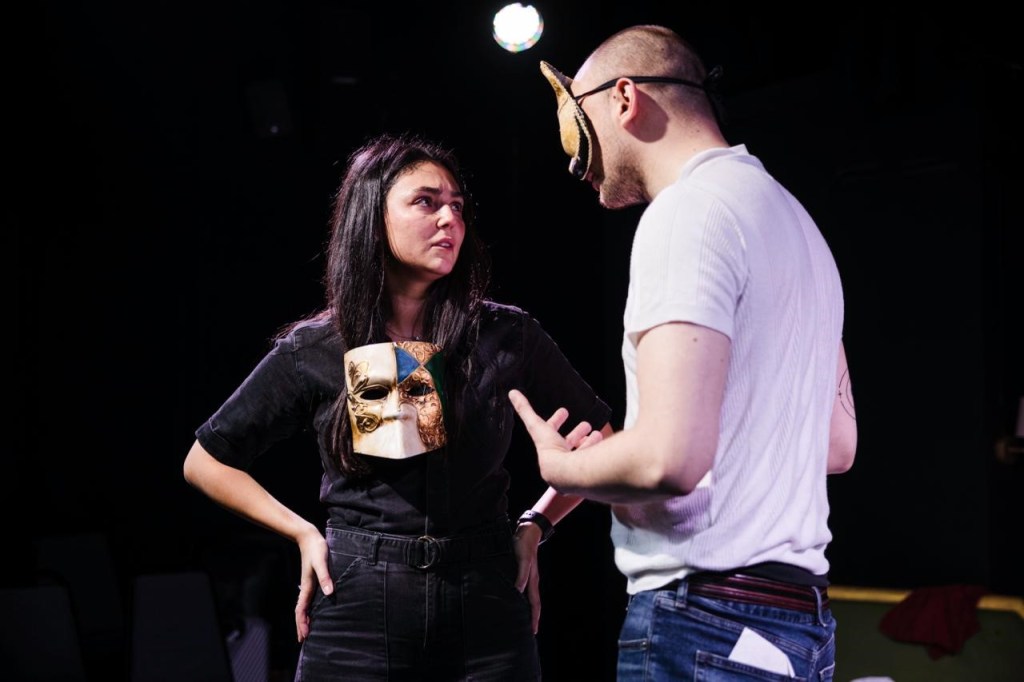
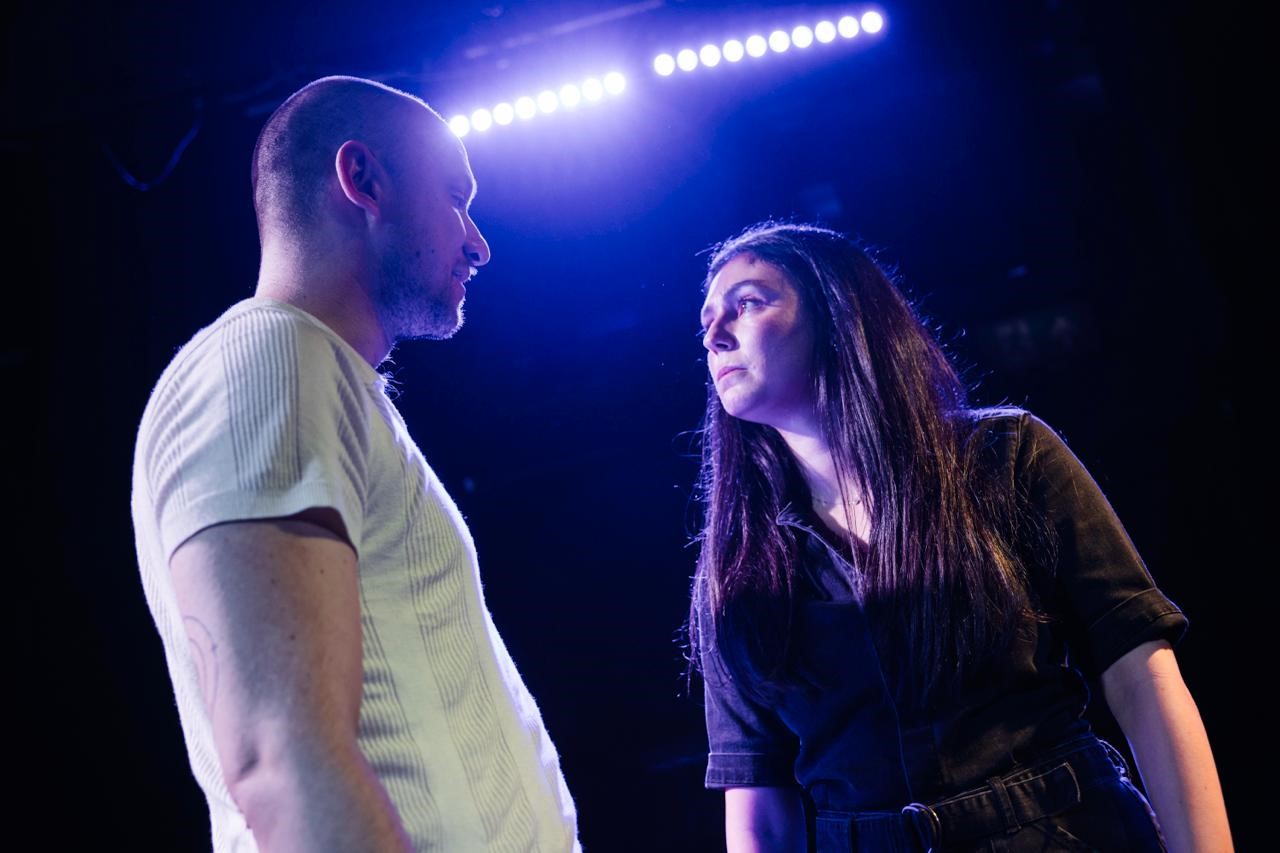
    On stage at the Hope Theatre: Robert Kot as Sam and Olivia Bernstone as Grid

    In a small room above a pub, two rows of punters track three walls and a gaudily draped burnt-orange bed leers in from the fourth. By the stage door, a pair of Venetian masks perch on a mid-century side table. Two faded wooden bar stools stand in lazy attendance. We’re in the Hope Theatre, and with the lights still up, it’s already claustrophobic.

    Clearly writer Tom Woffenden is familiar with a typical, low-budget trip to Venice: crowds, high expectations, and airless hotel rooms. With Director Saul Boyer, these twisted ringmasters throw an utterly broken relationship dynamic into this crucible, seemingly to watch their audience giggle and squirm. As time passes, it becomes clear they’re doing something altogether more impressive.

    In And Out Of Love is a new two-hander romcom with a juicy premise. A couple go on holiday to Venice, supposedly the most romantic city in the world. There’s only one problem: they broke up six weeks ago. And the hotel didn’t get the twin-bed memo. Curse booking.com’s watertight cancellation policy.

    Laughter and nostalgia are baked into the conceit, and in its breezy 70-minute run-time both are served up in spades. As a comedy it hits the mark: from minute one barks and guffaws fill the the Hope Theatre’s intimate confines. But there’s a little more to it than that. Boyer’s skilful direction and two powerful central performances transform In And Out Of Love into something more than the sum of its parts, packing a surprising emotional punch.

    The drama centres around two utterly mismatched individuals, Sam (Robert Kot) and Grid (Olivia Bernstone). Unaccountably they have been in a relationship, loved one another, and still cling to the dregs of that feeling. After spending five minutes in their company, it was a little difficult to buy into all that. Constant bickering aside, they have very little in common.

    Sam is a born-into-it ice cream man. He paces into the hotel room map-in-hand, his wide-brimmed hat and backpack completing the look of a browbeaten geography teacher. Words come out with a half-stutter as he pauses mid-sentence to buy himself time; he’s scanning his brain’s back catalogue for a fitting final wisecrack. In his constant search for the right thing to say, on occasion he’ll nail it. Just as often, his insight is slide-tackled by a misplaced cultural reference. On their first date, he quotes Gandalf. Planning a day trip, he refers to Venice as “a patch of waterous earth”.

    Grid works in Finance and carries herself with confidence. While Sam approaches the double-bed problem with thick layers of artificial panic, Grid sets down her outlandishly large suitcase, swaggers around the room and falls onto the bed. Sam – we really don’t need to worry. We’ve slept together before. If it’s such a big problem, we’ll top and tail.

    To believe in these two we’re going to need a bit of context, and it’s in the context giving that this production takes flight. From here, half the story is told in flashback. We watch their relationship bud, blossom and wilt. As we move back and forth through time, the music (Arthur Sawbridge) and lighting (Ben Sayers) carefully map the landscape.

    The first trip to the past (“remember when we first met?”) is like a gust of fresh air into the room. Their stifling dying-star dynamic lifted, we’re in a crazy golf bar for a mutual friends’ birthday party. Grid’s cheeky side is played up, and Sam manages to make a charm out of his awkward mannerisms. “Do you want to fuck?” “What??” “I said do you want to putt?”

    The central pair manage to create an authentically strange relationship, formed by circumstance and woven by weirdness. Woffendon’s script gives them a lot of material, and has the room quacking and snorting with staccato laughter. But we aren’t bearing witness to two Tarantino-conjured wisecrackers; they are bad at communicating with one another, and usually we’re laughing at their failed attempts to work it all out. They’re weird-but-normal people, and that helps to deepen our sympathy.

    The bed is centre-stage and central to the action; one moment as a symbol of the distance between them, the next as a weatherbeaten gondola. At the halfway mark, it’s host to a gloriously choreographed sex scene, limbs flailing under the covers as lights flash and tropical music plays. Clothes, books, and Prince Harry all fly out of the bed. By the end, we’re back in the past.

    Like all relationships, the beginning was built on performative playing-up to their bubbliest best selves. As the veneer lifts, they notice each other’s true selves. It’s been obvious from scene 1 that there won’t – or, at least, shouldn’t – be a happy ending between these two. But as we approach the denouement, it’s hard not to have a shred of hope that, somehow, they might work it all out.

    A delicately balanced show that bursts with heart, In And Out Of Love makes art out of awkwardness. Despair is cut with absurdist humour, joy tinged with anxiety, and despite inescapable incompatibility, the pairs’ tender attachment to one another pulls us along with them. They remind us of the value of volatile and painful experiences. Sometimes, it really is no-one fault.

    5 stars!


    About the author of this post

    James Bates-Prince is a writer for bloated WhatsApp groups and dingy blogs. Marketer by day, by night he’s just another Nothing in the Rulebook contributor to be found chained to a typewriter. Find him on Insta at @jbpme.

  • Thick, bland, and utterly forgettable: journalism as algorithm content-fodder
    Apparently, true investigative journalism can be found at the modern buffet; and not looking into issues such as climate change, geopolitical conflict or corporate corruption.

    Ah, the buffet. Is there a more perfect metaphor for modern life than a long table laden with overcooked pasta and rogue cubes of cheese, standing as both a challenge and a threat to the already wafer-thin veneer of human civility? Apparently, the Great Buffet Crisis has now been given the full Guardian treatment, and why not? We are, after all, a people in peril. Forget climate change, income inequality, and the small matter of impending economic collapse—what truly keeps us awake at night is the sight of a middle-aged man pilfering seven sausages when he only has plate space for four. I, for one, sleep easier knowing the fine minds of British journalism are finally addressing these egregious abuses of buffet etiquette.

    Of course, I could scarcely believe it when I read that we — those of us who thought the world still cared about things like, you know, investigative reporting — are supposed to be fining buffet abusers now. Fining. At a buffet. It’s like a Black Mirror episode co-written by the editor of Which? magazine. And there’s something almost poetic about that; it speaks to our cultural moment. A moment defined not by the grand sweep of history or the striving for greatness but by the bizarre minutiae of our own irrelevance. Yes, folks, while the world burns and the ice caps melt, we’re on to sausage policing.

    But don’t think that’s where the absurdity ends. No, no, dear reader. If you’ve got time (and let’s face it, you do because it’s either this or another scroll through Twitter — I’m sorry, X — to witness the masses of bots boosting misinformation and rage bait about one thing or another), why not also plunge into the deep, existential analysis of Britishcore? No, that’s not a subgenre of metal. It’s a list of 100 things we apparently must experience to truly feel British, like being ignored by a bus driver or eating a beige meal in a beige pub while contemplating your beige life. And what a relief it is to know that my identity as a Brit is defined not by the complex interplay of history, politics, and social change, but by whether or not I’ve stood on a beach in the rain or watched a seagull nick my chips.

    This, then, is where we find ourselves: cataloguing the human experience in bite-sized chunks of banality, all dressed up as profound cultural commentary. It’s journalism as wallpaper paste — thick, bland, and utterly forgettable. You’ll scan it, perhaps nod along in faux recognition, and then toss it aside like yesterday’s Metro. But the system doesn’t care. It doesn’t need you to remember; it only needs you to click. And click you will, because what else are you going to do? Read a novel? Engage in meaningful conversation? No, we both know you’re too busy watching someone dissect the subtle horrors of buffet queue etiquette.

    And yet, I can’t even bring myself to fully blame the writers of these articles. They’re just playing their part in this giant hamster wheel of content generation. It’s not their fault that we now live in a world where the purpose of journalism has been reduced to feeding the algorithm. Like industrial farmers shovelling slop to the pigs, the media shovels content at us — endless, unrelenting, and utterly devoid of nutritional value. They give us the slop; we consume the slop. We repost it, retweet it, share it with our mates as though passing off a meme with a philosophical bent constitutes deep social commentary. We are the ones clicking, scrolling, and scrolling again, so desperate for distraction that we’ll consume anything — anything — that occupies our brains for even the briefest of moments.

    It’s a symbiotic relationship, this endless cycle of content and consumption. Like zombies in a Romero film, we lurch forward with our slack jaws and vacant stares, hungry not for brains but for pixels. The most terrifying part is not that these articles exist, nor even that they are read by millions. No, what chills me to the bone is the fact that, despite knowing all of this, I’ll read the next one. And the one after that. And maybe, just maybe, I’ll even share them with a snarky comment about how vapid journalism has become — thus contributing to the very machine I claim to despise.

    So here we are, at the end of this article, itself a bloated, overlong brain fart of an idea stretched to breaking point. Am I, too, guilty of feeding the machine? Undoubtedly. But look at us: we’ve made it to the end, and for what? You’ll forget this article in precisely three minutes. Just in time to click on something else. After all, why bother with thought, reason, or discernment when there’s a fresh plate of digital slop waiting at the buffet of content?

    Now, if you’ll excuse me, I need to go check if I’ve had all 100 Britishcore experiences. I wouldn’t want to miss the one about being mildly annoyed by the wrong shade of grey in the sky.


  • “Writing a novel…feels almost architectural” – interview with Nicole Swengley
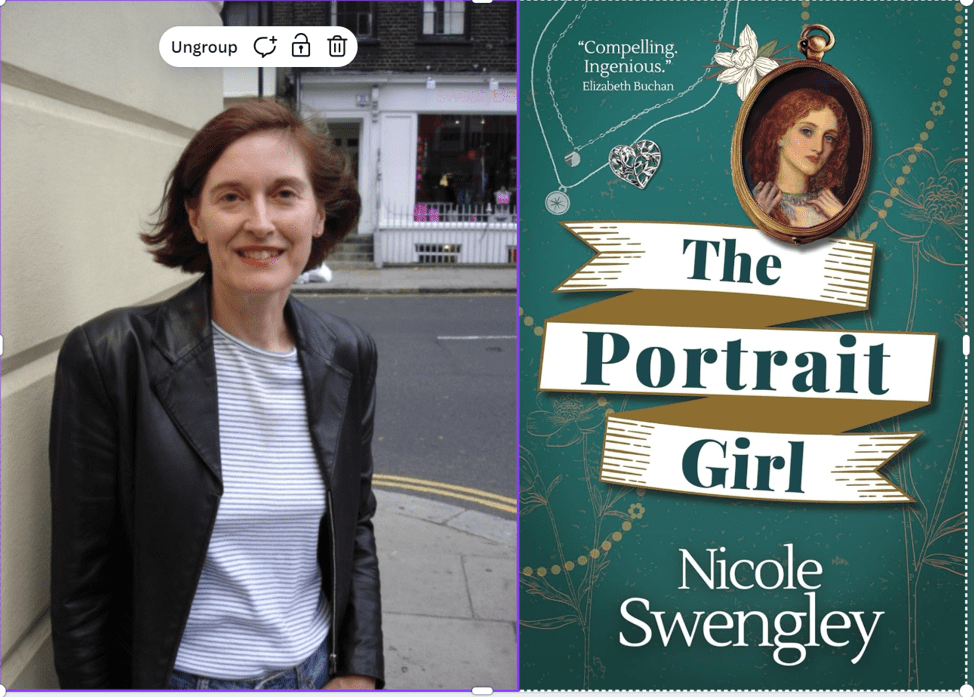
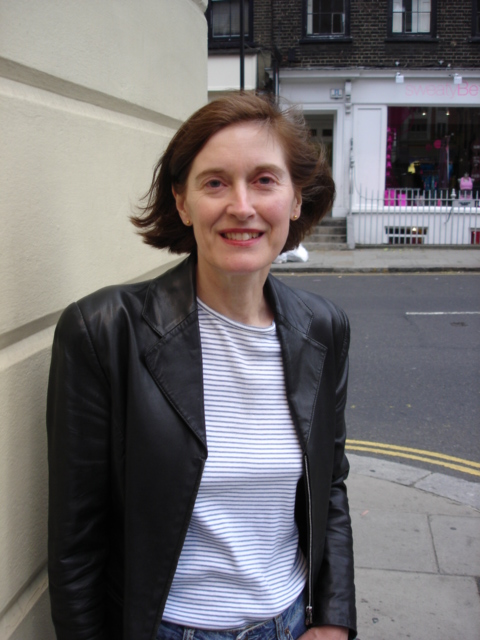
    Nicole Swengley

    Surrounded by supporters, friends and at least one prominent designer, Nicole Swengley launched The Portrait Girl on the 10th  October. This time-slip historical fiction piece was published by Breakthrough Books, an independent, author-led publishing collective based in Cornwall.

    The novel follows Freya Weatherby’s journey through the world of the Victorian art world. Vivid descriptions of art and design reveal Swengley’s fascination and deep understanding of the subject whilst also showcasing the illustrative power of her writing.

    A few days before the launch, Nothing in the Rulebook asked Nicole some questions. Below she highlights the differences between journalism and novel writing, some of her inspirations in both areas and reveals how she sets herself up for a successful day of writing.

    You have been writing as a journalist for 30 years, why did you choose to write a novel, why now?

    I’ve been drawn to creative writing since childhood and have given it a stab professionally, over the years, with a number of short stories published in women’s magazines and in a crime anthology. I was even shortlisted in a national magazine/TV short story competition many years ago. But I never really had sufficient time to devote to full-length fiction because I was constantly pitching features ideas to newspapers and magazines to sustain an income from freelance journalism. In 2017, however, I signed up for a Faber Academy fiction-writing course tutored by the author, Rowan Coleman, as I thought it would give me the impetus and techniques to start writing a novel. It was during this course that I began plotting The Portrait Girl and it all led from there.

    Much of your journalism has been about home design, what is it about this subject which inspires you? How has it influenced your new book?

    The Portrait Girl is Nicole Swengley’s first novel

    The world of design and interior decoration fascinates me. I admire the way designers analyse a practical problem and find ingenious ways to solve it. I’m also drawn to contemporary craftwork and feel we should support artisans in keeping traditional crafts alive. I find the aesthetic aspects of interior decoration very appealing, whether that’s pattern, colour, shape, texture or materials. I had great fun going to town on descriptions of the interiors in my novel, particularly a fictional house in Chelsea where much of the action takes place. Some of these fictional designs are directly inspired by the real-life work of contemporary designers who are mentioned in the Acknowledgments page of the book.

    What is your favourite piece of art and who is your favourite artist?

    It’s so hard to pick just one! I’m fortunate to have a small, pictorial piece of stained glass by the late Patrick Reyntiens (who worked with John Piper to create the stained glass in Coventry cathedral and Liverpool’s Metropolitan cathedral amongst many other commissions). It shows a figure resting or sleeping, face down, above which a landscape of fields and trees, divided by wavy lead-lines, creates an impression that the sleeper is dreaming of this place. Its deep blues and greens give the glass a jewel-like appearance and I couldn’t resist metaphorically popping it into an art collector’s vitrine in my novel. As for artists, the Pre-Raphaelites and their circle have been a particular favourite since discovering them as a teenager, so I’m delighted that the front cover of The Portrait Girl features an alluring study of a female head, painted in 1864 by Arthur Hughes. 

    What is your favourite book and who is your favourite author?

    It’s almost impossible to single out just one author, but based on the number of books I’ve read by the same writer it would be Daphne du Maurier. Of her books my favourite is Rebecca although I would recommend The King’s General to anyone who enjoys historical adventures.

    What have you found to be the biggest differences between writing fiction and journalism?

    As a journalist you tend to absorb wads of information then pare it to a minimum. In contrast, writing a novel demands expansion – opening out, building up, layering in a way that feels almost architectural.

    What does a day of writing look like for you?

    I’ve always been a ‘morning’ person, so I’ll start writing around 8.30am to 9am and carry on until a lunchbreak around 1pm. I’ve been surprised, however, to find writing in the afternoon can work well when I’m deeply engaged in the story although I usually go for a walk at some point and rarely continue later than 6pm.

    What inspired you to get into writing?

    Reading stories from a young age. I was constantly borrowing books from our local library, and it felt like a natural progression to try and write my own.

    Who has been your biggest journalistic inspiration?

    I think it’s incredibly sad that the London Evening Standard – essential reading for Londoners since 1827 – no longer prints daily editions (it’s now weekly) as I admire Melanie McDonagh’s common-sense opinion columns, Robert Fox’s defence analysis and Jonathan Prynn’s business reporting. Over on the BBC, Ros Atkins’ ‘explainers’, with their grasp and distillation of hard facts, are a model of their kind.

    Who has been your biggest novelistic inspiration?

    Far, far too many authors to mention here! I feel that everything you enjoy reading is somehow filtered into the mix of inspiration. Childhood favourites included H. Rider Haggard, Conan Doyle and Robert Louis Stevenson. Teenage years were spent with Mary Stewart and Daphne du Maurier. Later I found Paul Scott, Elizabeth Taylor, Olivia Manning, William Trevor, Rosamond Lehmann, Sarah Waters, John Banville, Elizabeth Buchan, Alan Hollinghurst, Kate Morton, Margaret Atwood, Rupert Thomson…..the list of inspiring novelists just goes on.

    What advice would you give to aspiring journalists and authors?

    Be persistent. Just keep going until you get there.

    Did you have an ideal reader in mind when writing The Portrait Girl?  Do they differ from the ideal reader of your fiction?

    Reading is such a subjective experience. Everyone brings their own take to it so I never had a specific reader in mind. Basically, I tried to write the kind of novel I would enjoy reading myself – part-adventure, part-mystery with plenty of atmospheric description.

    Can we expect more novels from you in the future? Can you tell us anything about them?

    I have a work-in-progress – another mystery – so I’d like to say, more in hope than expectation, watch this space.

    What upcoming books by other authors are you most excited about?

    I can’t wait to read The Sea House by Louise Douglas – she’s so good on compelling family secrets – and Paula Hawkins’ latest thriller, The Blue Hour, sounds tantalisingly chilling. Amelia Kyazze’s story about the kindness of strangers, The Café on Manor Lane, should provide a soothing contrast while Alan Hollinghurst’s first novel for seven years, Our Evenings, and William Boyd’s Gabriel’s Moon will also be on my reading-list.


  • Bestselling author of ‘Romancing the Stone’ has lifetime of literary works transformed into audiobooks

    New York Times Bestselling author, Catherine Lanigan, has seen her entire lifetime catalogue of books transformed into audiobooks.

    Best known for her novelisations of the iconic films “Romancing the Stone” and “Jewel of the Nile,”
    Lanigan has an extensive catalogue spanning romance, mystery, and inspirational non-fiction. After recently reclaiming the rights to her catalogue of literary works, Lanigan said she was eager to find a trusted audio producer and publisher to help bring her stories to a new generation of readers through audio format.

    In the end, Lanigan partnered with Sounded – who describe themselves as having an ethical voice replica program. In a world currently dominated by conversations around Artificial l Intelligence and deep fake technology, it is natural that some of our Nothing in the Rulebook readers may be sceptical of such a solution. Yet Sounded state a commitment to working directly with voice artists and authors to ensure consent and control are at the heart of their production process. The company’s TrueVoice™ technology uses a series of original recordings, to replicate an author’s voice.

    The theory goes that this technology preserves an author’s unique storytelling style, while eliminating the need for lengthy new recording sessions, which can take 8-12 weeks per book on average.

    Lanigan, for her part, appears pleased with the result.

    She said: “I spent a year trying to find a reputable, honest audio publisher when I found Sounded on the IngramSpark expert directory. I had worked with Ingram for decades in my 45 years of publishing. If I could not trust their recommendation, I was about to give up.

    My readers, fellow authors and friends have urged me for years to put my books in audio, but in MY voice. I had just recorded one of my newest books and was poised to bite the bullet and spend the rest of my life in a sound studio. Thank God for Sounded’s TrueVoice™. My experience has been one of joy. The results are amazing.”

    You can hear a sample of Lanigan’s ‘True’ voice below: